

IV Fluids 101: The Difference Between Crystalloids, Saline and Lactated Ringer’s
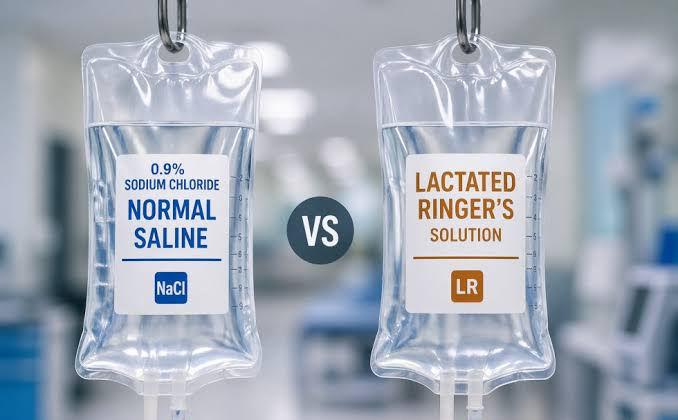
IV fluids look simple from the outside, clear liquid in a plastic bag, flowing through a tube. Clinically, the choice of fluid can matter. Different IV fluids have different electrolyte profiles, different effects on blood chemistry, and different best-use cases.
This guide explains the basics of crystalloids, Normal Saline, and Lactated Ringer’s in plain language. It is for general education only and is not a substitute for medical judgment, facility protocols, or patient-specific care.
What IV fluids are meant to do
IV fluids are used to support circulation, hydration, medication delivery, and electrolyte balance. In acute care, they may help replace fluid losses from vomiting, diarrhea, blood loss, burns, surgery, or poor oral intake.
The body maintains a narrow balance of water, sodium, potassium, chloride, and acid-base status. This balance is called homeostasis. When illness, injury, or dehydration disrupts that balance, clinicians may use IV fluids to help restore it.
A fluid order is not just “give water.” It is a decision about:
How much fluid the patient needs
How quickly it should be given
Which electrolytes should be included
Which fluid compartment needs support
What risks the patient has, such as kidney disease, heart failure, or abnormal sodium levels
The most common IV fluids used for resuscitation and replacement are crystalloids.
Crystalloids are the main category
Crystalloids are IV fluids made of water plus small dissolved particles, usually electrolytes such as sodium and chloride. These particles are small enough to move across many body membranes, which means crystalloids distribute beyond the bloodstream after infusion.
Common crystalloids include:
0.9% Normal Saline
Lactated Ringer’s
Plasma-Lyte
Half Normal Saline, or 0.45% sodium chloride
Crystalloids are often grouped by tonicity.
Isotonic fluids have a concentration similar to blood plasma. Normal Saline and Lactated Ringer’s are commonly treated as isotonic fluids in clinical use.
Hypotonic fluids have a lower concentration than plasma. They can move more water into cells and require careful use.
Hypertonic fluids have a higher concentration than plasma. They pull water into the bloodstream and are used in specific situations under close monitoring.
For basic fluid replacement and resuscitation, isotonic crystalloids are the usual starting point.
Normal Saline is simple and widely used
Normal Saline is one of the most familiar IV fluids. It contains 0.9% Sodium Chloride, meaning it is made of sterile water with sodium and chloride dissolved in it.
In many settings, we use Normal Saline, Sodium Chloride 0.9%, because it is widely available, compatible with many medications, and commonly used with blood products.
Normal Saline contains:
Component | Approximate amount |
Sodium | 154 mEq/L |
Chloride | 154 mEq/L |
Buffer | None |
Its strength is simplicity. It does not contain potassium, calcium, or lactate. That can make it useful when clinicians want a straightforward sodium chloride solution.
Common uses include:
Initial fluid replacement in many acute care settings
Medication dilution or carrier fluid
IV line flushing
Fluid support when compatibility is a concern
Use with blood transfusions, according to common practice and facility policy
Normal Saline also has limitations. Its chloride concentration is higher than that of normal plasma. When large volumes are given, this can contribute to hyperchloremic metabolic acidosis, a shift in acid-base balance linked to the chloride load.
That does not make Normal Saline “bad.” It means the dose, clinical context, and patient condition matter.
Lactated Ringer’s is a balanced crystalloid
Lactated Ringer’s, often shortened to LR, is also a crystalloid. The difference is that LR contains several electrolytes and a buffer. It is called a balanced crystalloid because its electrolyte profile more closely resembles plasma than Normal Saline does.
Lactated Ringer’s typically contains:
Component | Approximate amount |
Sodium | 130 mEq/L |
Chloride | 109 mEq/L |
Potassium | 4 mEq/L |
Calcium | 3 mEq/L |
Lactate | 28 mEq/L |
The lactate in LR is not the same as giving lactic acid. In most patients, the liver metabolizes lactate into bicarbonate, which can help buffer acid in the body.
LR is often used in:
Surgery and anesthesia
Trauma and burn care
Dehydration
Gastrointestinal fluid losses
Sepsis resuscitation, when appropriate
Situations where a balanced crystalloid is preferred
Because LR contains potassium and calcium, clinicians consider patient-specific factors before using it. For example, patients with severe hyperkalemia, certain renal conditions, or specific blood product compatibility concerns may need a different fluid or closer monitoring.
The calcium in LR can interact with citrate in blood products under certain circumstances, so many institutions follow specific policies about whether LR can run with blood through the same line. Normal Saline remains the traditional default for blood transfusion compatibility.
Saline and Lactated Ringer’s are both crystalloids
A common point of confusion is the relationship between these terms. Crystalloid is the category. Normal Saline and Lactated Ringer’s are examples within that category.
The choice between them is not about which one is universally better. It is about matching the fluid to the clinical goal.
Feature | Normal Saline | Lactated Ringer’s |
Fluid type | Crystalloid | Crystalloid |
Main electrolytes | Sodium, chloride | Sodium, chloride, potassium, calcium |
Buffer | None | Lactate |
Chloride level | Higher than plasma | Closer to plasma |
Common advantage | Broad compatibility | More balanced electrolyte profile |
Common concern | Chloride load with large volumes | Contains potassium and calcium |
For small volumes, the difference may not be clinically significant for many patients. For larger-volume resuscitation, electrolyte composition and acid-base effects become more important.
How clinicians choose the right fluid
Fluid choice depends on the patient, not just the bag. Clinicians consider the diagnosis, lab results, vital signs, medications, organ function, and expected fluid losses.
Key questions include:
Is the goal resuscitation, maintenance, replacement, or medication delivery?
Does the patient have abnormal sodium, potassium, chloride, or bicarbonate?
Are there kidney, liver, or heart concerns?
Is the patient receiving blood products?
How much fluid is likely to be needed?
Are repeat labs and fluid balance being monitored?
For example, a patient with severe vomiting may have different electrolyte needs than a patient with trauma-related blood loss. A patient with heart failure may need fluid very cautiously, even if dehydrated. A patient receiving a medication infusion may need a compatible carrier fluid more than a resuscitation fluid.
The key takeaway
Crystalloids are the broad family of IV fluids used to support hydration, circulation, and electrolyte balance. Normal Saline is a simple sodium chloride solution with wide compatibility. Lactated Ringer’s is a balanced crystalloid with electrolytes and a lactate buffer.
Both fluids are valuable. The right choice depends on the patient’s condition, lab findings, treatment goal, and institutional protocols. Understanding the difference helps make IV fluid therapy clearer, safer, and more purposeful.


.png)
Comments