

Why Does My IV Bag Say 0.9% Sodium Chloride?

An IV bag can look simple, but the label often raises questions. One of the most common labels is 0.9% sodium chloride, and it usually means the bag contains a sterile saltwater solution used to give fluid through a vein.
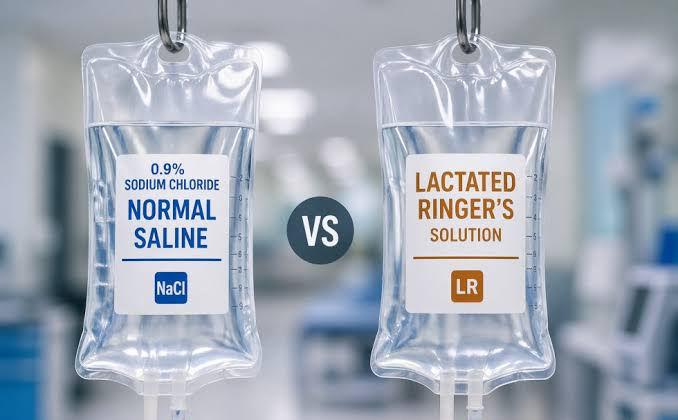
This fluid is often called normal saline. It is one of the most widely used IV fluids in hospitals, emergency rooms, surgery centers, and outpatient clinics. The “0.9%” tells clinicians how much sodium chloride, or salt, is dissolved in the water.
This article is for general education only. IV fluids are medical treatments, and the right fluid depends on the person, the condition being treated, lab results, medications, and clinical judgment.
0.9% sodium chloride is sterile saltwater
Sodium chloride is the chemical name for salt. In an IV bag labeled 0.9% sodium chloride, the solution contains:
0.9 grams of sodium chloride
Per 100 milliliters of sterile water
That means a 1,000 mL bag contains about 9 grams of sodium chloride.
The water is not ordinary tap water. It is sterile water prepared for medical use, and the final solution is made to be safe for IV administration when used correctly. The salt dissolves completely, so the fluid looks clear and colorless.
The label may use one of several names:
0.9% sodium chloride
Sodium chloride injection
Normal saline
NS
Saline solution
These usually refer to the same basic type of IV fluid, though the full label should always be checked for exact details, volume, additives, and intended use.
Why it is called normal saline
The word “normal” can be confusing. It does not mean the fluid is natural, mild, or harmless in every situation. In this context, normal saline refers to a salt concentration that is close to the saltiness of blood and body fluids.
Blood plasma has a certain concentration of dissolved particles, including sodium and chloride. A 0.9% sodium chloride solution is considered isotonic, which means its concentration is close enough to blood that it does not usually cause major water shifts into or out of red blood cells.
That matters because IV fluids enter the bloodstream directly. If a fluid is much more diluted or much more concentrated than blood, it can affect cells and fluid balance in ways clinicians must manage carefully.
Normal saline is often used because it is familiar, widely available, and compatible with many clinical situations. It contains water, sodium, and chloride, but it does not contain sugar, potassium, calcium, or other nutrients unless the bag label says they have been added.
What sodium and chloride do in the body
Sodium and chloride are electrolytes, which means they carry an electrical charge when dissolved in fluid. The body uses electrolytes to help manage fluid balance, nerve signals, muscle function, and acid-base balance.
Sodium plays a major role in how the body holds and moves water. It helps regulate the amount of fluid in the bloodstream and around cells.
Chloride works closely with sodium. It also helps maintain fluid balance and contributes to the body’s acid-base system.
When someone receives Normal Saline, Sodium Chloride, Electrolytes and fluid balance are all part of the clinical picture. A clinician may choose this solution to support circulation, replace fluid losses, administer medications, or keep an IV line open.
Why someone might receive 0.9% sodium chloride
Clinicians use 0.9% sodium chloride for many reasons. The purpose depends on the person’s condition and the care setting.
Common uses include:
Replacing fluids
Saline may be given when a person has lost fluid from vomiting, diarrhea, bleeding, sweating, poor intake, or certain medical conditions.
Supporting blood pressure
In some situations, IV saline helps increase fluid volume in the bloodstream, which may support blood pressure.
Delivering medications
Many IV medications are diluted in saline or flushed through an IV line with saline. The fluid helps move the medication into the vein safely and consistently.
Keeping an IV open
A small amount of saline may be used to maintain IV line flow or flush the line before or after medications.
During surgery or procedures
Saline is often used as part of fluid management in operating rooms, emergency care, and monitored medical procedures.
The bag itself does not tell the whole story. The rate, total amount, timing, and reason for giving it are just as important as the solution inside.
What 0.9% sodium chloride does not contain
A plain 0.9% sodium chloride IV bag is basic by design. It usually contains only sodium chloride and sterile water.
It does not provide meaningful calories. It does not contain protein, fat, vitamins, or complete nutrition. It is not the same as a sports drink, oral rehydration solution, or nutritional supplement.
It also does not automatically correct every electrolyte problem. For example, it contains no potassium. If a person needs potassium, magnesium, calcium, or glucose, clinicians use different fluids or add medications when appropriate.
Some IV bags look similar but contain different solutions, such as:
IV fluid label | What it generally means |
0.9% sodium chloride | Isotonic saline with sodium and chloride |
D5W | Dextrose 5% in water, a sugar-containing fluid |
Lactated Ringer’s | A balanced crystalloid with several electrolytes |
0.45% sodium chloride | Half-normal saline, a more diluted saline solution |
Small differences on the label can matter a lot. That is why IV fluids are selected, checked, and administered by trained medical staff.
Can normal saline have side effects
Yes. Even a common IV fluid can cause problems if the amount, rate, or situation is not right.
Possible concerns include:
Too much fluid in the body
Swelling
Shortness of breath in vulnerable patients
High sodium levels
High chloride levels
Changes in acid-base balance
Irritation or complications at the IV site
Some people need extra caution with IV fluids, including those with heart failure, kidney disease, severe dehydration, major blood loss, liver disease, or certain electrolyte problems.
This does not mean 0.9% sodium chloride is unsafe. It means it is a real medical treatment. Clinicians weigh the benefits and risks based on the person’s condition.
Why the label matters
The label on an IV bag gives medical staff key information. It helps confirm the correct fluid, concentration, volume, sterility, expiration date, lot number, and whether anything has been added.
For patients and families, the label can also reduce confusion. Seeing “sodium chloride” may sound technical, but in this case it simply means a sterile saltwater solution at a specific concentration.
Still, questions are reasonable. If an IV bag is being given and the reason is unclear, it is appropriate to ask:
What is this IV fluid for?
How much will be given?
How long will it run?
Are there any medicines added to it?
Are there any concerns with my labs or medical conditions?
Clear answers can make treatment easier to understand.
The simple takeaway
A bag labeled 0.9% sodium chloride contains sterile saltwater with 0.9 grams of sodium chloride per 100 mL of fluid. It is commonly called normal saline because its concentration is close to the body’s fluid concentration.
Clinicians use it to replace fluids, support circulation, deliver medications, and maintain IV access. It is common, but it is still a medical treatment that should be used for the right reason, in the right amount, and with the right monitoring.


.png)
Comments