

Can you Overdo Electrolytes?
- revitalizemobileiv
- Feb 4
- 3 min read
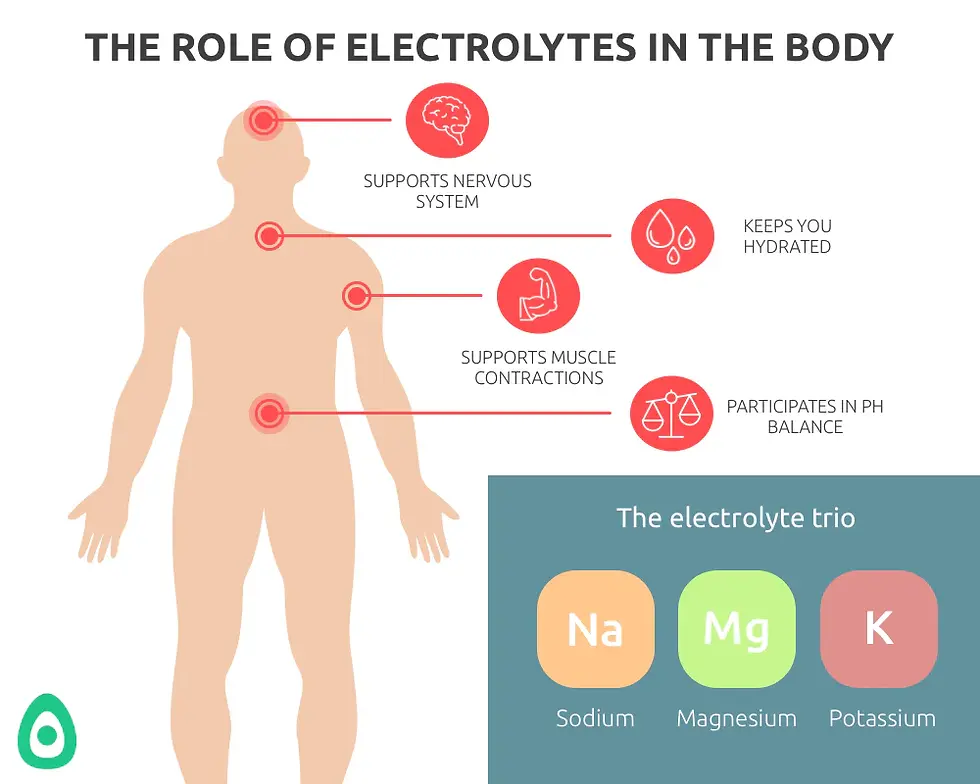
Electrolytes play a crucial role in keeping our bodies functioning properly. They regulate nerve and muscle function, hydrate the body, balance blood acidity and pressure, and help rebuild damaged tissue. But can you have too much of a good thing? Many people wonder if it’s possible to overdo electrolytes and what the consequences might be. This post explores the risks of consuming too many electrolytes, how to recognize the signs, and how to maintain a healthy balance.
What Are Electrolytes and Why Do We Need Them?
Electrolytes are minerals that carry an electric charge when dissolved in bodily fluids. The main electrolytes include sodium, potassium, calcium, magnesium, chloride, bicarbonate, and phosphate. These minerals help:
Regulate fluid balance inside and outside cells
Support muscle contractions and nerve impulses
Maintain acid-base balance in the blood
Support heart function and blood pressure regulation
We get electrolytes from the foods we eat and the fluids we drink. For example, bananas are rich in potassium, dairy products provide calcium, and table salt contains sodium and chloride.
How Much Electrolyte Intake Is Normal?
The recommended daily intake varies by electrolyte and individual factors such as age, activity level, and health status. For example:
Sodium: 1,500 to 2,300 mg per day
Potassium: 2,500 to 3,000 mg per day
Calcium: 1,000 mg per day for most adults
Magnesium: 310 to 420 mg per day
Most people get enough electrolytes through a balanced diet. Athletes or people who sweat heavily may need more to replace losses.
Can You Overdo Electrolytes?
Yes, it is possible to consume too many electrolytes, especially through supplements, sports drinks, or excessive salt intake. Overdoing electrolytes can disrupt the delicate balance your body maintains and lead to health problems.
Sodium Overload
Sodium is the most common electrolyte people consume in excess. High sodium intake can cause:
High blood pressure
Fluid retention and swelling
Increased risk of heart disease and stroke
Eating too much salty food or drinking electrolyte drinks with high sodium content can push intake beyond safe levels.
Potassium Excess
Too much potassium, known as hyperkalemia, can cause:
Muscle weakness
Irregular heartbeats
In severe cases, cardiac arrest
Potassium supplements or certain medical conditions can raise potassium levels dangerously.
Calcium and Magnesium Overload
Excess calcium may lead to kidney stones, constipation, and impaired absorption of other minerals. Too much magnesium can cause diarrhea, nausea, and in extreme cases, heart issues.
Signs You Might Have Too Many Electrolytes
Recognizing symptoms early can prevent serious complications. Watch for:
Muscle cramps or weakness
Fatigue or confusion
Irregular heartbeat or palpitations
Swelling or puffiness
Nausea or vomiting
If you experience these symptoms and suspect electrolyte imbalance, seek medical advice.
How to Maintain a Healthy Electrolyte Balance
Balancing electrolytes means getting enough but not too much. Here are practical tips:
Eat a varied diet rich in fruits, vegetables, nuts, and dairy
Limit processed and fast foods high in sodium
Drink water regularly, especially during exercise or hot weather
Use electrolyte supplements only when recommended by a healthcare provider
Monitor symptoms if you have kidney disease or take medications affecting electrolyte levels
When Electrolyte Supplements Are Useful
Electrolyte supplements and sports drinks can help in specific situations:
Endurance athletes losing electrolytes through sweat
People with dehydration from illness or heat exposure
Individuals with certain medical conditions causing electrolyte loss
Use these products carefully and follow dosage instructions to avoid overconsumption.


.png)
Comments